
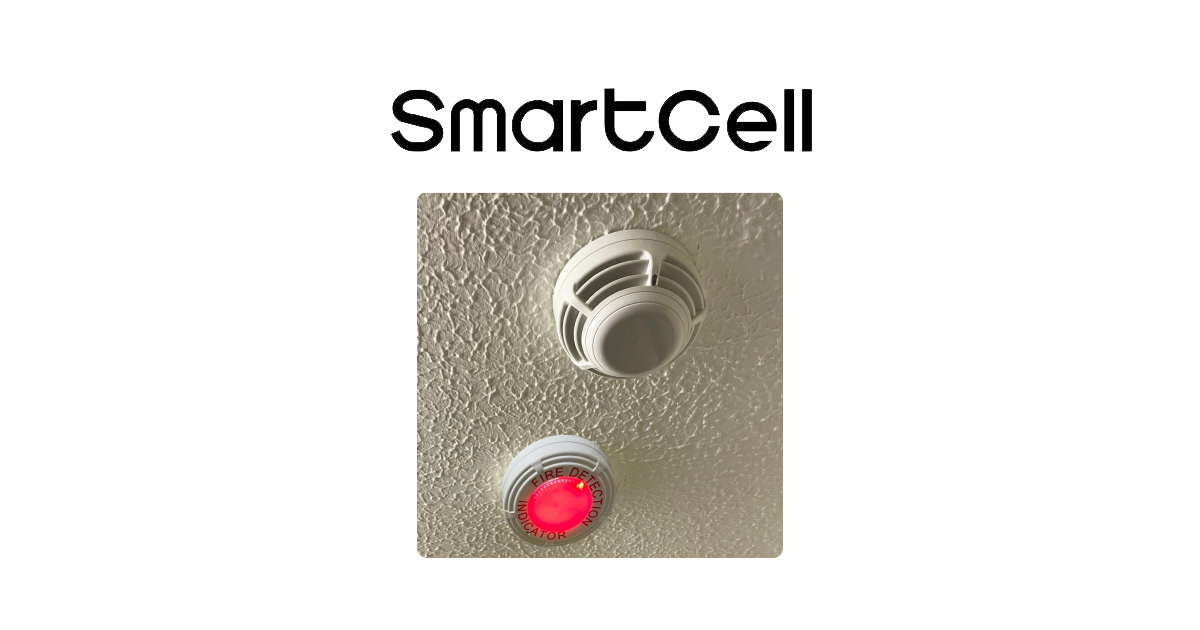
Secure Micro Bases

The Securetone Micro addressable sounder and combined sounder & flasher bases have been designed for use with the Simplicity Micro Addressable Fire Alarm System.

The bases act as an interface between the Simplicity Micro Addressable Fire Alarm Panel and Zeta Conventional Fire Alarm Detectors (these can be either smoke, heat or combined). This will offer considerable cost savings where a sounder or combine sounder & flasher with detector is required.

The bases include a binary dill switch to configure the address and a jumper to identify which type of detector.

The Simplicity Micro Fire Alarm System is available now from Discount Fire Supplies.

Determine the number of zones required

Based on the recommendations provided in BS 5839, determine the number of zones required to comply with the standard and adequately protect the premises. Generally, at least one zone per floor will be necessary, but other factors such as the floor area and the number of devices that can be connected to a zone should be considered. Select a control panel that provides the number of zones required, bearing in mind possible future expansion. It is better to have too many zones available than too few.

Determine the number of detectors required

Detector density is governed by the system classification and recommendations in BS 5839. Where full protection is required at least one detector should be sited in each room, and evenly spaced within circulation areas and escape
routes. Each detector within a room should include an integral sounder. Where there is more than one detector in an area it may not be necessary for all detectors to include a sounder, or the use of stand-alone sounders can be considered.

Determine the number of manual call points required

As a general rule a manual call point should be located adjacent to every exit from the premises, and at the exit from an upper floor to below. In larger premises it may be necessary to locate call points at intermediate positions to minimise the travel distance - refer to BS 5839.

Consider alarm audibility

BS 5839 recommends a general alarm sound level of 65 dB(A) throughout the building, and 75 dB(A) at the bedhead where people are sleeping. The detector integral sounder provides a ‘normal’ level of 90 dB(A) at one metre which easily satisfies this requirement within individual rooms. In circulation or open areas it may not be necessary to provide a sounder in each detector, or conversely it may be necessary to provide stand-alone sounders where there is
little or no detector coverage.

Remember, integral sounders can be simply disabled or set to low volume via the detector DIL switch if the level is too loud, but to increase the sound it is necessary to add stand-alone sounders if there are insufficient integral sounders.

Ancillary services

  1. Is it necessary to repeat the fire alarm indications elsewhere in the building,e.g. is there an alternative entrance that may be used by the fire brigade? Ifso a repeater panel will be required.
  2. Is remote silence and reset necessary, e.g. is the control panel inaccessibleat certain periods? If so select a repeater panel with remote control facilities.
  3. Are auxiliary outputs required to shutdown plant, close doors, etc? If so include an output unit for each signal required. Remember, the output unitrequires a separate 24 vdc supply; however, it may not be necessary to provide a separate PSU for each unit - consider the circuit loading and physical location of devices.

The Rafiki Twinflex Fire Alarm System is available now from Discount Fire Supplies.

This information has been referenced from an official Rafiki publication.

Live Help

We’re pleased to now offer our website users a live help service. Customers can now click to chat to one of our friendly operators to discuss any sales or technical enquiries they may have.

Fire Alarm Systems available now from Discount Fire Supplies.

twinflex-panel

A Fire Alarm Battery is required to maintain the Rafiki Twinflex System in operation in the event of a mains supply failure. The following batteries are suitable:-

Generally, these battery sizes provide up to 72 hours standby operation followed by 30 minutes alarm operation, but the standby period will be reduced if there are auxiliary standing loads such as may be imposed by devices powered from the auxiliary output.

Separate power supply units used in conjunction with output units may or may not require standby batteries depending on the application. For example, it may be acceptable for retained fire doors to close in the event of mains failure, in which case a battery is not necessary.

Alternatively, if a ventilation fire damper for instance is being held open via a maintained supply, it may have an undesirable affect on the building operation if it closes under mains fail condition, in which case a battery is required to maintain the supply.

The Rafiki Twinflex Fire Alarm Panels & Rafiki Twinflex Fire Alarm System are available now from Discount Fire Supplies.

This information has been referenced from an official Rafiki publication.

twinflex-detector

There are two high performance fire sensors incorporated within the Rafiki Multipoint fire detector:

Optical scatter smoke sensor

Based on a high efficiency infra-red LED and receiver pair, the optical chamber includes two lenses and has been designed to be tolerant against the effects of ambient light, dust and insects, whilst giving a high signal/noise ratio for good electronic stability.

Heat sensor

Based on a selected thermistor heat sensor.

Research

Research into fire detection has shown that this is currently the best combination of sensors for giving a good response to a wide range of fires. The heat sensor can be used to boost the response of the optical sensor to free burning fires which produce a lot of heat. This negates the need for ionisation detectors which contain radioactive sources, and have an extremely poor response to smouldering fires. It also means that the specifier does not have to predict in advance the expected type of fire.

The signals from the sensors are processed with a microcomputer. Signals from the sensors are read every 400ms and a fire decision is taken every 5 seconds. This involves analysis using long term averaging as well as faster signals. A set of rules is processed which optimises the detection response depending on the detection mode selected, which gives the fastest response to fires whilst rejecting signals which could cause false alarms.

The background signal from the optical scatter smoke sensor is updated regularly to compensate for the effects of dust build up and long term ageing. Values are stored in non-volatile EEPROM memory, along with calibration data and the device serial number.

The Rafiki Twinflex Multipoint Detectors & Rafiki Twinflex Fire Alarm System are available now from Discount Fire Supplies.

This information has been referenced from an official Rafiki publication.

Rafiki Twinflex Wiring Diagram

The Rafiki Twinflex Fire Alarm System is available now from Discount Fire Supplies.

This information has been referenced from an official Rafiki publication.

Rafiki Twinflex Fire Alarm System

The Twinflex Detectors and Twinflex Call Points are arranged in zones to enable the location of a fire alarm to be identified. The number of zones depends on the size and the layout of the premises, and the capacity of the Twinflex Control Panel. The number of zones on the panel (2, 4, or 8) is the maximum capacity available and may not be the number of zones installed, i.e. there may be less. There should be a chart or drawing provided with the system indicating the area and layout of the zones – ensure that you are familiar with the zone layout so that appropriate action can be taken in the event of a fire alarm.

The Rafiki Twinflex System may be interfaced with the building services, e.g., the air conditioning may be shut down when the alarm sounds. Make sure that you know what happens when the fire alarm operates as this can affect routine system testing.

The system is powered from the mains supply and incorporates a standby battery which automatically maintains the system in operation for a time of at least 24 hours in the event of a mains supply failure.

The Rafiki Twinflex Fire Alarm System is available now from Discount Fire Supplies.

This information has been referenced from an official Rafiki publication.

The Twinflex Fire Alarm System requires a pair of wires per zone to accommodate the field devices, i.e. Twinflex Detectors, Twinflex Call Points, Twinflex Sounders& Flashers, and Twinflex Output Units.

Each zone is wired as a radial circuit, i.e. the wires are terminated at the panel at one end and finish at a device in the field - it is not necessary to bring the cable pair back to the panel. Each device on a zone must be connected in parallel with the zone pair, branch circuits and tees are not acceptable.

The cable utilised must be Approved Shielded Cable. The use of twin and earth or ‘belden’ type cable is not acceptable.

Where a two-stage system (Checkpoint) is being installed, dwelling zones and communal zones must be wired separately, although they may be on the same floor of the building.

Cable type, routing and physical protection should be in accordance with the recommendations in BS 5839.

The Rafiki Twinflex Fire Alarm System is available now from Discount Fire Supplies.

This information has been referenced from an official Rafiki publication.

As a guide the following Twinflex devices can be installed on each Rafiki Twinflex Fire Alarm System zone:

The following are some examples of fully loaded Rafiki Twinflex Fire Alarm System zones:

  1. 8 x Rafiki Twinflex Multipoint Detector with Sounder (normal volume) & 16 x Rafiki Twinflex Multipoint Detector with Sounder (low volume)
  2. 10 x Rafiki Twinflex Multipoint Detector with Sounder (normal volume) & 2 x Rafiki Twinflex Hatari Sounder (Red) or Rafiki Twinflex Hatari Sounder (White)
  3. 10 x Rafiki Twinflex Multipoint Detector with Sounder (low volume) & 4 x Rafiki Twinflex Hatari Sounder (Red) or Rafiki Twinflex Hatari Sounder (White)

For combinations of devices the supplier should be consulted if the upper limits are approached.

The Rafiki Twinflex Fire Alarm System is available now from Discount Fire Supplies.

This information has been referenced from an official Rafiki publication.

One of the many benefits of the Rafiki Twinflex Fire Alarm System is the unique detector concept whereby a single detector provides up to seven operating modes to suit the application. However, to gain the maximum benefit from this feature, the detector mode must be correctly applied to each specific installation to ensure that the optimum detection is provided.

For many applications the factory preset (Smoke 2) is probably suitable, but where environmental conditions are such that an alternative setting is appropriate, the detector must be configured accordingly.

The selection of mode for each detector may be made by an experienced commissioning engineer, or by the system designer or project engineer. In any case the mode selected for each detector should be recorded within the project documentation and/or on the drawings for future reference. The mode of any detector can subsequently be amended if the environment changes.

For advice on selecting the most appropriate mode for a given application, refer to the following chart.

rafiki-twinflex-multipoint-applications

The Rafiki Twinflex Multipoint Detectors & Rafiki Twinflex Fire Alarm System are available now from Discount Fire Supplies.

This information has been referenced from an official Rafiki publication.

« Previous Entries